As temperatures drop across coastal Andhra Pradesh, many people in Vizianagaram notice a familiar pattern: a runny nose one day, a cough the next, and a feeling of heaviness in the chest that does not clear as quickly as expected. Winter and the early cool months often bring a rise in upper and lower respiratory infections. Most of these illnesses are mild and settle with rest, fluids, and time. Some do not.
This article explains, in plain language, how a common cold may differ from chest congestion that needs medical attention, what warning signs matter, and when it may be reasonable to seek care at a hospital with pulmonology and emergency support. It is for general public education only. It is not a diagnosis, treatment plan, or substitute for a clinician’s advice.
Medical disclaimer: Symptoms and outcomes vary from person to person. Self-diagnosis can delay needed care. If you are unsure, or if breathing feels difficult, seek urgent medical help. For emergencies in Vizianagaram, call the hospital emergency line listed at the end of this article.
Why respiratory infections rise in cooler months
Cooler weather itself does not “cause” every cough, but several factors often cluster in winter:
- More time indoors can increase close contact and viral spread.
- Dry air and temperature swings may irritate sensitive airways.
- Dust, cooking smoke, outdoor burning, and seasonal pollution can add throat and chest irritation.
- Common colds, influenza-like illness, and other respiratory viruses often circulate more in cooler months.
For people in Vizianagaram, this can mean more sneezing, sore throat, and cough. Most symptoms stay in the upper airways (nose, sinuses, throat). When infection or inflammation involves the lower airways (bronchi and lungs), people often describe chest heaviness, wheezing, tightness, or a mucus-producing cough.
Knowing the difference matters most for older adults, young children, pregnant people, and anyone with asthma, COPD, heart disease, diabetes, or a weakened immune system—not because every cold needs a hospital visit.
What a common cold usually looks like
A common cold is typically a mild viral infection of the upper respiratory tract. Common features include runny or blocked nose, sneezing, mild sore throat, mild headache or body ache, low-grade or no fever, and a mild dry or lightly productive cough. Symptoms often peak within a few days and gradually improve over about a week to ten days.
A cold can still feel miserable. Rest, hydration, warm fluids, saline rinses (if suitable), and pharmacist- or doctor-advised symptom relief may help. Antibiotics do not treat viruses and are generally not advised “just in case.”
Important: Early symptoms can also mark influenza, COVID-19, allergic rhinitis, sinusitis, or another condition. Assessment may be needed when symptoms are severe, prolonged, or unusual for you.
What people mean by “chest congestion”
“Chest congestion” is a everyday phrase, not a precise medical diagnosis. People often use it when they feel:
- Heaviness, tightness, or pressure in the chest
- A rattling or wet-sounding cough
- Mucus that is hard to clear
- Shortness of breath with routine activity
- Wheezing or noisy breathing
- Discomfort that seems deeper than a simple throat tickle
Possible causes include acute bronchitis, worsening asthma or COPD, pneumonia, post-nasal drip, acid reflux–related cough, and—less commonly—cardiac or other non-lung causes of chest discomfort.
Because the phrase covers many possibilities, ask: How severe are the symptoms, how long have they lasted, and are there red-flag warning signs?
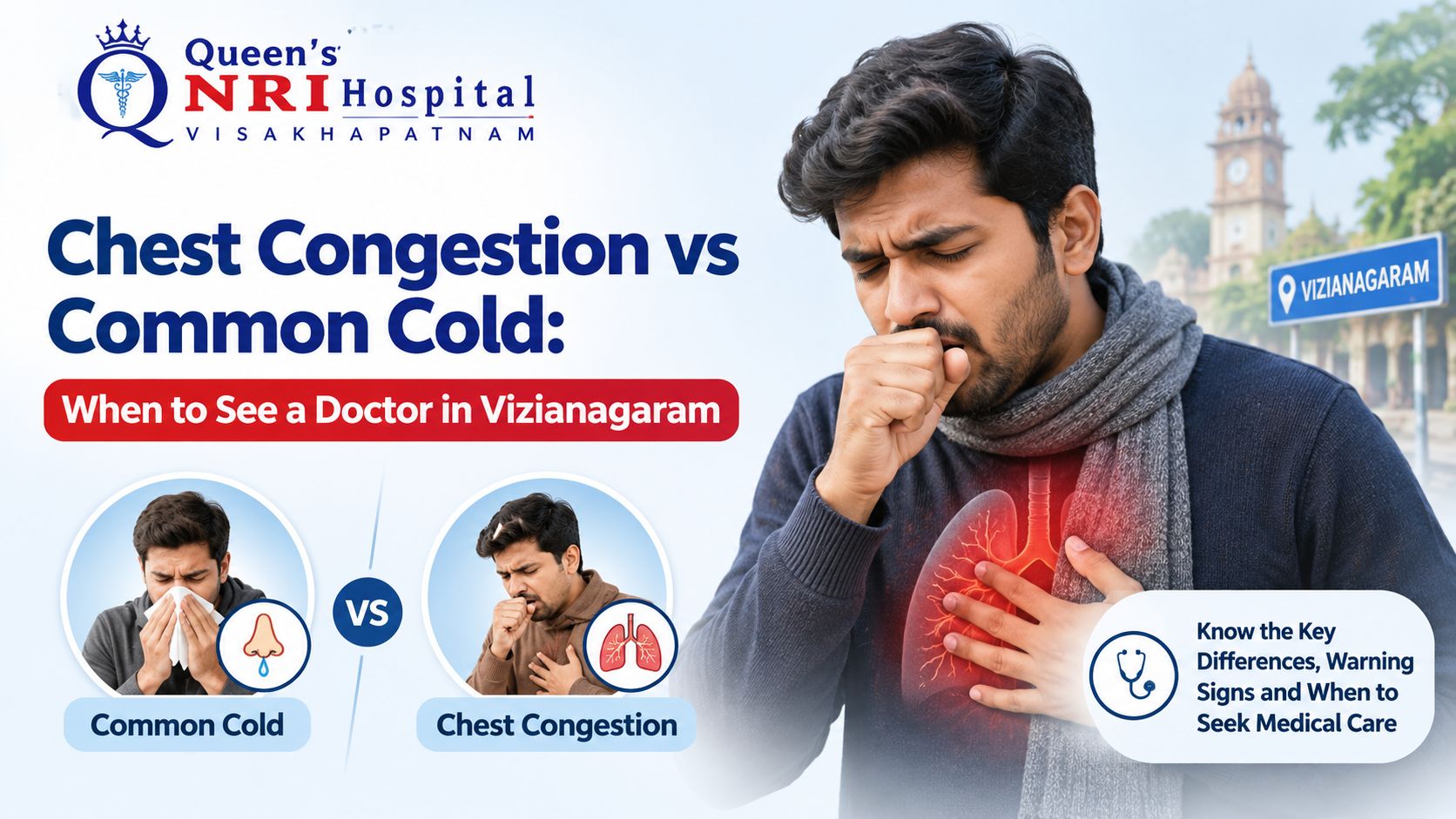
Common cold vs chest congestion: a practical comparison
| Feature | More typical of a common cold | More concerning for lower airway / chest involvement |
|---|---|---|
| Main location of symptoms | Nose, throat, sinuses | Chest, breathing effort |
| Breathing | Usually comfortable at rest | Shortness of breath, rapid breathing, or difficulty speaking full sentences |
| Cough | Mild; may be dry or light | Persistent, worsening, or producing a lot of coloured sputum |
| Fever | Absent or low-grade | Higher fever, or fever that returns after improvement |
| Chest pain | Uncommon | Pain with deep breaths, or new unexplained chest pain |
| Oxygen / colour | Normal colour of lips and nails | Bluish lips/fingertips, unusual paleness, or extreme fatigue |
| Duration | Improves within about 7–10 days | Lasts beyond 10–14 days, or worsens after a brief improvement |
This table is a guide for awareness, not a scoring tool. People with chronic lung disease may have a lower threshold for seeking care even with milder symptoms.
When home care may be reasonable
For otherwise healthy adults with mild cold-like symptoms, home care often includes rest, fluids, temperature checks, avoiding smoke and strong fumes, hand hygiene, covering coughs, and following label guidance for any pharmacy medicines (ask a clinician if you take regular medicines or have other illnesses).
If you are unsure whether symptoms are mild, seek advice. In Vizianagaram, outpatient review through general medicine or pulmonology may help clarify whether symptoms remain upper-airway or suggest lower respiratory involvement. Children, older adults, and people with chronic conditions may need earlier review than healthy adults.
Warning signs: when to see a doctor promptly
Contact a doctor or visit a hospital if any of the following occur:
- Shortness of breath at rest or with light activity
- Rapid breathing, noisy breathing, or wheezing that is new or worse than usual
- Chest pain, pressure, or pain that worsens with breathing
- High fever, confusion, severe weakness, or inability to keep fluids down
- Cough lasting more than about 10–14 days without clear improvement
- Cough that produces bloody or rust-coloured sputum
- Symptoms that improve briefly and then worsen again (sometimes described as a “second wave”)
- Bluish colour of lips or fingertips
- In infants: poor feeding, unusual sleepiness, fewer wet nappies, or visible chest retractions
For sudden severe breathing difficulty, chest pain suggestive of a cardiac emergency, collapse, or major trauma, use emergency services immediately. Queen’s NRI Hospital lists a 24x7 emergency facility with a 12-bed emergency room equipped with monitors, oxygen, suction, and facilities for intubation and resuscitation, along with ambulance support. Emergency contact details appear at the end of this post.
Groups that may need earlier medical advice
Some people benefit from earlier clinical review even when symptoms start mildly:
- Adults over 60–65 years
- Young children and infants
- Pregnant people
- People with asthma, COPD, previous pneumonia, or other chronic lung disease
- People with heart disease, diabetes, kidney disease, or cancer treatment
- People on medicines that suppress immunity
- Smokers or those with heavy exposure to indoor smoke or occupational dust
If you fall into one of these groups and develop a winter cough with fever or breathlessness, do not wait for symptoms to become severe before seeking advice.
How clinicians may evaluate respiratory symptoms
Evaluation depends on the history and examination. Depending on the situation, a clinician may consider:
- Listening to the lungs and checking oxygen saturation
- Reviewing fever, cough character, and duration
- Blood tests or sputum studies when infection severity needs clarification
- Chest X-ray when pneumonia or another lung process is suspected
- Pulmonary function testing (PFT) in selected chronic or unclear cases
- Further tests such as arterial blood gas (ABG) analysis in more serious illness
At facilities with a pulmonology department, additional procedures listed publicly can include bronchoscopy, pleural fluid aspiration, and related assessments when clinically indicated. Queen’s NRI Hospital’s pulmonology page notes equipment such as ventilators, multipara monitors, ABG, and PFT among its listed supports. Need for any specific test is decided by the treating clinician; not every cough requires advanced testing.
Laboratory and radiology services that operate with extended or 24x7 support can help when symptoms present outside usual daytime hours. The hospital also describes 24x7 in-house laboratory and pharmacy services on its public site.
Everyday steps that may reduce winter respiratory risk
No single habit prevents every infection, but practical steps may help:
- Hand hygiene with soap and water or sanitiser when appropriate.
- Vaccination: Discuss influenza and other recommended vaccines with your doctor.
- Smoke-free air: Avoid tobacco and reduce indoor cooking smoke where possible.
- Reduce spread: Cover coughs; stay home when highly symptomatic.
- Chronic disease control: Keep asthma or COPD plans updated; do not stop prescribed inhalers without advice.
- Rest and fluids rather than pushing through high fever or severe fatigue.
- Air quality: Limit outdoor exertion on heavy dust or smoke days if airways are sensitive.
These steps are supportive and do not replace care when warning signs appear.
Respiratory care context in Vizianagaram
Vizianagaram residents often balance busy work and family schedules with seasonal illness. Knowing where multi-specialty support exists can reduce delay when symptoms escalate.
Queen’s NRI Hospital is a 100-bed multi-specialty and super-specialty hospital on M.G. Road, Vizianagaram (D.No 5-1-11, Srinivasa Nagar, opposite SBI Main Branch, Vizianagaram-535001). It was established in October 2017. Publicly listed services relevant to winter respiratory concerns include:
- Pulmonology department support
- Emergency care with oxygen and resuscitation facilities
- ICU / critical care capacity described on the hospital’s about page (including a 13-bed ICU and additional critical care beds as stated there)
- 24x7 pharmacy and laboratory services as listed on the hospital website
- Diagnostic support including digital X-ray and CT among radiology services described on the site
Mention of these facilities is factual context for local readers. It is not a claim that every respiratory illness requires hospital admission, nor a ranking against other hospitals. Care pathways should be individualised.
Myths that can delay the right care
Myth: “If I can still walk, my lungs are fine.” Fact: Breathlessness with light activity still deserves attention.
Myth: “Green mucus always means antibiotics.” Fact: Colour alone does not prove bacterial infection; a clinician decides.
Myth: “Steam alone will clear any congestion.” Fact: Humidity may soothe some people but does not treat pneumonia or severe asthma flares.
Myth: “It is only a winter cold; it can wait.” Fact: Higher-risk groups should not ignore red flags.
Myth: “Children with a mild cough never need review.” Fact: Infants and young children can worsen quickly; early assessment is often wiser.
FAQ
Is chest congestion the same as pneumonia?
Not necessarily. Chest congestion is a symptom description. Pneumonia is a specific infection involving the lungs and usually needs clinical evaluation, and sometimes imaging. Only a qualified clinician can determine whether pneumonia is present.
Can a common cold turn into a chest infection?
A viral cold can sometimes be followed by bronchitis or a secondary infection, especially in people with risk factors. Worsening breathlessness, high fever, or prolonged cough after a cold are reasons to seek medical advice.
How long should I wait before seeing a doctor for a winter cough?
Mild cold symptoms that steadily improve may not need a visit. Seek care sooner if you have red-flag symptoms, belong to a higher-risk group, or if cough and fever last beyond about 10–14 days without clear improvement. When in doubt, ask a clinician.
Do I need a CT scan for every cough?
No. Most uncomplicated colds do not need CT imaging. Chest X-ray or other tests are used when the clinical picture suggests they may change management. Your doctor decides based on examination and history.
When is emergency care more appropriate than an outpatient visit?
Use emergency care for severe breathlessness, chest pain that could be cardiac, confusion, collapse, bluish lips, or sudden severe illness. Queen’s NRI Hospital lists emergency support at 08922-225188 (also confirm locally if numbers differ on different pages of the site).
Are antibiotics always needed for chest congestion?
No. Many respiratory illnesses are viral. Antibiotics help only when a bacterial infection is likely or confirmed. Unnecessary antibiotics can cause side effects and resistance.
Can air pollution or dust in Vizianagaram worsen symptoms?
Irritants such as dust, smoke, and polluted air can aggravate cough and wheeze in sensitive people. Reducing exposure and seeking care for persistent symptoms may help; this does not replace evaluation of infection or other causes.
Conclusion
A common cold and troublesome chest congestion can start in similar ways, especially during cooler months in Vizianagaram. Mild upper-airway symptoms often improve with rest and supportive care. Persistent cough, breathlessness, high fever, chest pain, or symptoms in higher-risk people deserve timely medical review. Educational awareness helps families act earlier—without panic, and without ignoring warning signs.
If you need local hospital information, visit https://www.queensnrihospital.com/, review pulmonology and emergency service pages, or call 08922-225177 / 88. For emergencies, call 08922-225188.
This article is for public health education only and does not replace personalised medical advice, diagnosis, or treatment.
Hospital contact (factual): Queen’s NRI Hospital, D.No 5-1-11, Srinivasa Nagar, M.G. Road, Opp. SBI Main Branch, Vizianagaram-535001
Phone: 08922-225177 / 88 | Emergency: 08922-225188 | WhatsApp: 76619 76613
Website: https://www.queensnrihospital.com/